

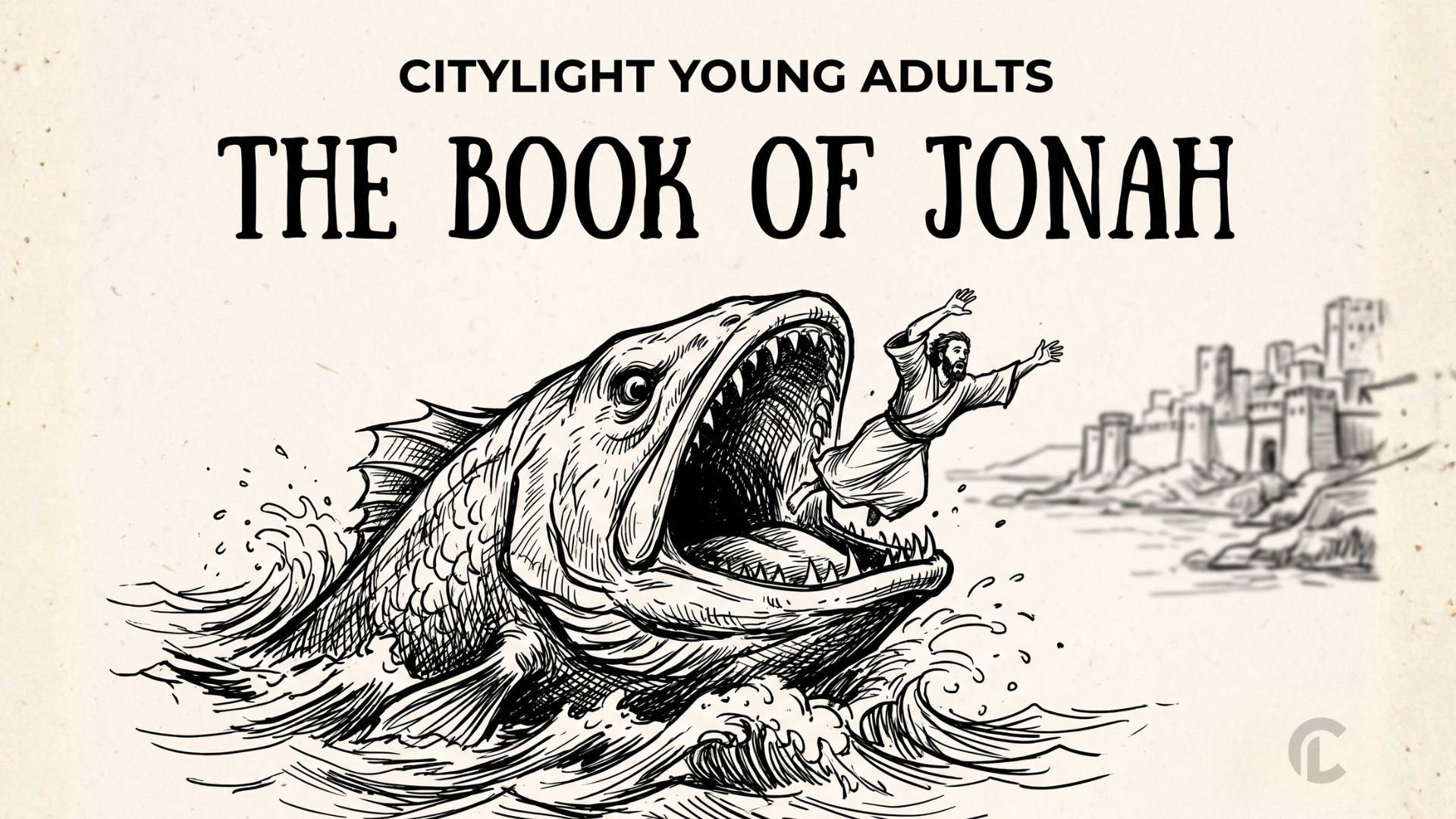
Is This Life Really Worth Living?
The Book of Jonah
Jonah 4:5-8 | Ikenna Nwokeji

Is this Life Really Worth Living?
We all know what it feels like when reality fails to meet our expectations. It often starts on a micro-level; we are rushed, bags are stuffed, a box splits open, and the coffee grounds spill all over the kitchen floor. These small moments of overwhelming stress can quickly escalate into a mental breakdown. But this frustration does not stay small for long; it expands into heavier burdens. A lost job; a broken-down car; a failed relationship. When hard things happen in rapid succession, we start questioning our circumstances, our direction, and ultimately what God has for us.
The questions grow broader and heavier.
Eventually, we find ourselves asking the ultimate question: Is this life really worth living?
Let's look at a historical figure who asked this very question: the prophet Jonah. God called Jonah to preach repentance to the Ninevites, the sworn enemies of Israel. Jonah expected justice and destruction for these people who had captured and killed the innocent for years. Instead, God showed them love and mercy. Jonah was angry because his expectation of justice collided with the reality of God's grace.
When we face deep disappointments and our expectations shatter, how do we respond? To experience the life God promises, we must do three things.
Abandon Self-Reliance
Notice what Jonah did when grace bypassed his expectation. He went outside the city, sat down, and waited for Nineveh to be destroyed. He was waiting for a door that God had already closed.
How foolish is that?
And yet, we do the exact same thing. When people tell us no, we refuse to accept it; we decide to find another way to get what we want because we view ourselves as the most important authority in our lives. This is the reality of our sin. Our rebellion against God produces self-reliance. We try to take our brokenness and create our own outcomes; this only generates more brokenness and leads directly to absolute frustration.
It is a vicious cycle of trying to resolve our pain without approaching the Master who created all things.
Our response must pivot away from our own efforts and move toward a full-on dependence on God. While sin produces self-reliance which leads to frustration, faith produces dependence which leads to life. When we place our trust in Jesus, we are saying we trust God's power to produce the right outcome. We know He is gracious, merciful, slow to anger, and abounding in steadfast love.
Stay Aware of God's Plan
To trust God with the outcome, we have to stay aware of His plan. God appointed a plant to save Jonah from discomfort, which made him glad. Then, God appointed a worm to kill the plant and a scorching wind to beat down on his head, sending him into despair.
Why would God orchestrate these conflicting realities?
God was prodding Jonah. He was trying to reveal the true state of Jonah's heart. God did not attack him or strike him down; He applied pressure so Jonah would turn his eyes upward and interact with his Creator. Often, our situations fluctuate between good and bad. Sometimes they meet our expectations, and sometimes they leave us scorched.
If we fixate entirely on our current stress, we grow blind to what God is doing all around us.
Imagine Jonah sitting outside the city with his arms crossed, locked in on his anger toward Nineveh. Meanwhile, God is moving mightily in the city, in Tarshish, and across the globe. We can easily slip into this same apathy. We wake up, reach for our phones, and scroll aimlessly to ignore what God is doing. If we remain aware of His ultimate plan of redemption and the depth of His love, we can remain steady even when life takes an unsteady pattern.
Assume a New Perspective
We cannot always explain why bad things happen or why our realities fall short of our hopes. But Jesus promises that while we are in the world, He will keep us from the evil one and hold us steady.
In his frustration, Jonah declared that it was better for him to die than to live. Some of us have felt that exact same heavy despair.
But God's theme from the beginning of time has always been life. He formed man from the dust and breathed the breath of life into him in Genesis. He urged His people to choose life in Deuteronomy. He made us alive together with Christ in Ephesians. Because of our sin and rebellion, we brought death upon ourselves and lost the ability to produce life on our own. We needed an outside source of life to rescue us.
This is the profound beauty of redemption.
God sent His only Son, Christ Jesus, to die for our sins and take the judgment we deserved. He did this to offer us abundant life here on earth and eternal life to come. Jesus declared that the thief comes to steal, kill, and destroy, but He came so that we might have abundant life. When the lie creeps in that it is better to die, we must let Jesus renew our minds and shift our perspective. We put our faith in the One who is the resurrection and the life, trusting Him to walk with us and secure our eternity.
Disclaimer:
This blog post was developed with the assistance of Artificial Intelligence, based on the sermon transcript, and was thoughtfully reviewed to ensure they align with the Pastor’s message.