

Is God Really THAT Faithful?
The Book of Jonah
Jonah 3:1-10 | Pastor John Arevalo

Is God Really THAT Faithful?
If we are brutally honest, most of us consider ourselves relatively faithful to what God has called us to do; but upon closer inspection, we realize we fall drastically short. We go out of our way to avoid following God, fleeing to our own versions of Tarshish. Tarshish represents our place of comfort; it isolates us from the closeness of God. Meanwhile, Nineveh represents the place of calling; it demands we carry the compassion of God to places we would rather avoid. When faced with this tension, we often run.
We carry selfish motives, we perform the bare minimum, and we wonder if God is genuinely going to show up for us. We ask ourselves a haunting question.
Is God really that faithful, even if I am not that faithful?
God is that faithful to give you another chance even when you didn't deserve one.
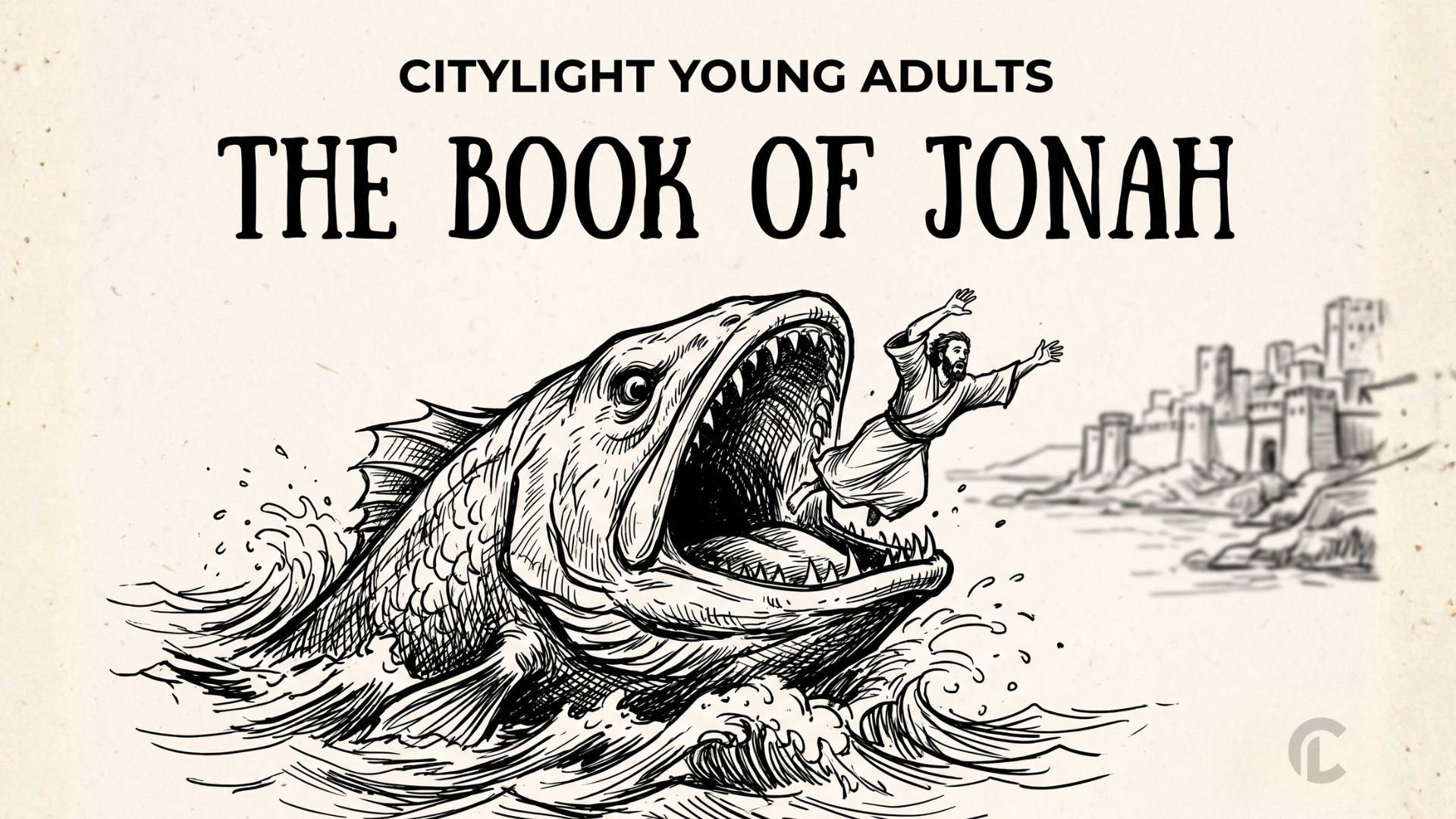
In the Old Testament, God's silence was often a severe sign of judgment. When King Saul actively rebelled, the Lord refused to answer him. Yet, when Jonah rebelled and found himself sinking into the belly of a great fish, God heard his cry and spoke to him a second time. This grace is staggering when we consider the depth of Jonah's rebellion.
Jonah did not just take a wrong turn; he actively ran in the opposite direction of the Great Commission. God called him to a specific people group in Nineveh, but Jonah bought a ticket to the westernmost edge of the known map. He went to the ends of the earth for his own great comfort rather than for God's great calling.
We do the exact same thing.
We follow our own hearts instead of God's heart. We prioritize our comfort over our calling. And even when we are caught in our rebellion, our repentance is often deeply flawed.
Let's look at this from another angle. When we compare Jonah's prayer in the belly of the fish to King David's prayer of repentance in Psalm 51, a glaring omission surfaces. David cried out over his transgressions and begged for a clean heart. Jonah simply declared his distress. He never explicitly mentioned his sin. He was profoundly stressed about the consequences of his rebellion, but he lacked true brokenness over the rebellion itself.
We frequently confess our sins without truly crying out over them.
We mourn the lost relationships, the ruined reputations, and the painful circumstances our sin creates, but we fail to mourn the offense against a holy God. Yet, even with an imperfect, consequence-driven confession, God still intervened. God gave Jonah a second chance.
God is that faithful to use you even when you don't have the best motives.
Obedience was not a joyful surrender for Jonah. The biblical language suggests his obedience was like a piercing; it was excruciatingly painful, like pulling teeth, to submit to God's will. He was dying to himself, and he hated every agonizing step.
This is a shared human reality. Are you with me?
Sometimes going to church, reading the Bible, or trying to love a difficult person feels like an immense burden. We show up, but our spirits are bitter. Jonah appeared faithful on the outside, but his internal motives were completely fractured.
Faithlessness does not always start when we quit; it often starts when we do the bare minimum.
Nineveh was a massive city that required a three-day journey to cover. Jonah walked for one single day. He did the bare minimum. Furthermore, his sermon was an absolute theological disaster. He delivered a five-word sermon in Hebrew. He completely omitted the prophetic standard of declaring "Thus says the Lord". He offered no call to repentance, no mention of God's grace, and no assurance of forgiveness. He simply pronounced that Nineveh would be overthrown, utilizing the exact same word used for the absolute destruction of Sodom and Gomorrah.
He was quick to judge, eager to condemn, and entirely devoid of mercy.
Despite Jonah's horrific attitude and bare-minimum effort, the people of Nineveh believed God. Jonah likely witnessed more conversions in a single day than Isaiah, Jeremiah, and Ezekiel saw combined. God used a deeply flawed, reluctant prophet to spark a massive revival.
If God can use us when we are doing the bare minimum with terrible motives, imagine what He will do when we engage with a pure heart.
Consider the reality of that. Like an exhausted parent parallel parking a minivan full of screaming children, we might struggle and complain through our obedience. It feels messy, frustrating, and poorly executed. But God is like the encouraging stranger pulling up alongside us, giving us a thumbs-up. He is cheering us on. He is our greatest advocate, constantly working to transform our souls even as we stumble through our calling.
Ultimately, we must confront the reality that we do not deserve this kind of persistent patience. The wages of sin is death. One lie, one moment of gossip, or one minute lived for our own Tarshish requires a fatal payment. What it costs for us to make things right with God is our very lives.
But we have been given another chance.
We possess this chance solely because Jesus Christ lived the perfect life we could never live. He paid the agonizing penalty for our sin on the cross, dying the death we deserved. Three days later, He defeated death so that anyone who believes in Him might experience eternal life. We are completely unworthy of this grace; yet He continually pursues us. God is genuinely that faithful, even when we are not.
Disclaimer:
This blog post was developed with the assistance of Artificial Intelligence, based on the sermon transcript, and was thoughtfully reviewed to ensure they align with the Pastor’s message.